

Creativity
A broader perspective

Welcome! I’m excited to share some thoughts on creativity today.
Our story starts many years ago, when I was a young child in the fifth grade:
“That is the worst thing I have ever seen,” my art teacher declared as she came by my desk. She snatched the tinfoil/maker/glued-yarn creation off my desk and held it up for the class to see. “Look at this. Just awful. This is NOT what the assignment should look like,” she announced. Turning to me she said, “Art is not for you. Never be an artist.”
I couldn’t hold back the tears. She hadn’t been kind to my work before but this was a new level of judgment. That night I resolved never to do art again outside of class. What would be the point? I was terrible at it.
I was required to attend art classes with this woman for three more agonizing years. I came to despise my creations. I would tear up my work and throw it in the trash as soon as it was (poorly) graded.
After my last compulsory art class in eighth grade I stayed far away from ‘doing art.’ I instead became an admirer of the arts. I would stand transfixed in front of paintings and photographs on display in museums and galleries. My closest friends were visual artists. I even attended college next to the Rhode Island School of Design (RISD) and immersed myself in the art there, all the while refusing to participate in the creative process because I am not creative.
*****
I am not creative is something adults say a lot. Interestingly, I’ve yet to meet a young child who has allowed this thought to enter their mind, let alone believe it to be true.
It seems to me that adults are misunderstanding creativity. In my experience, not only is every human creative, we create all the time.
Humans are creative beings. We create in every moment whether we are aware of it or not, whether we are intentional in our creations or not. Every thought, feeling, and action is creative.
The word create comes from the Latin crecere meaning to grow. When we create, we seek to grow – ourselves, an idea, a problem, something physical, etc. The drive for growth is evident in children; they are constantly pushing themselves past whatever limits they may have brushed up against the day or minute before. They seek to outgrow themselves.
Although we are creative beings, most of the time we create unintentionally from a place of no awareness. Habits or past behavioral patterns are behind most of our thoughts, feelings, and actions. These patterns of thought and action are laid down early in life and as a result we rarely stop to consider how they may be influencing our behavior now.
Let’s consider what we eat for breakfast as an example. In the United States, most people eat something like this (see photo below) for breakfast.
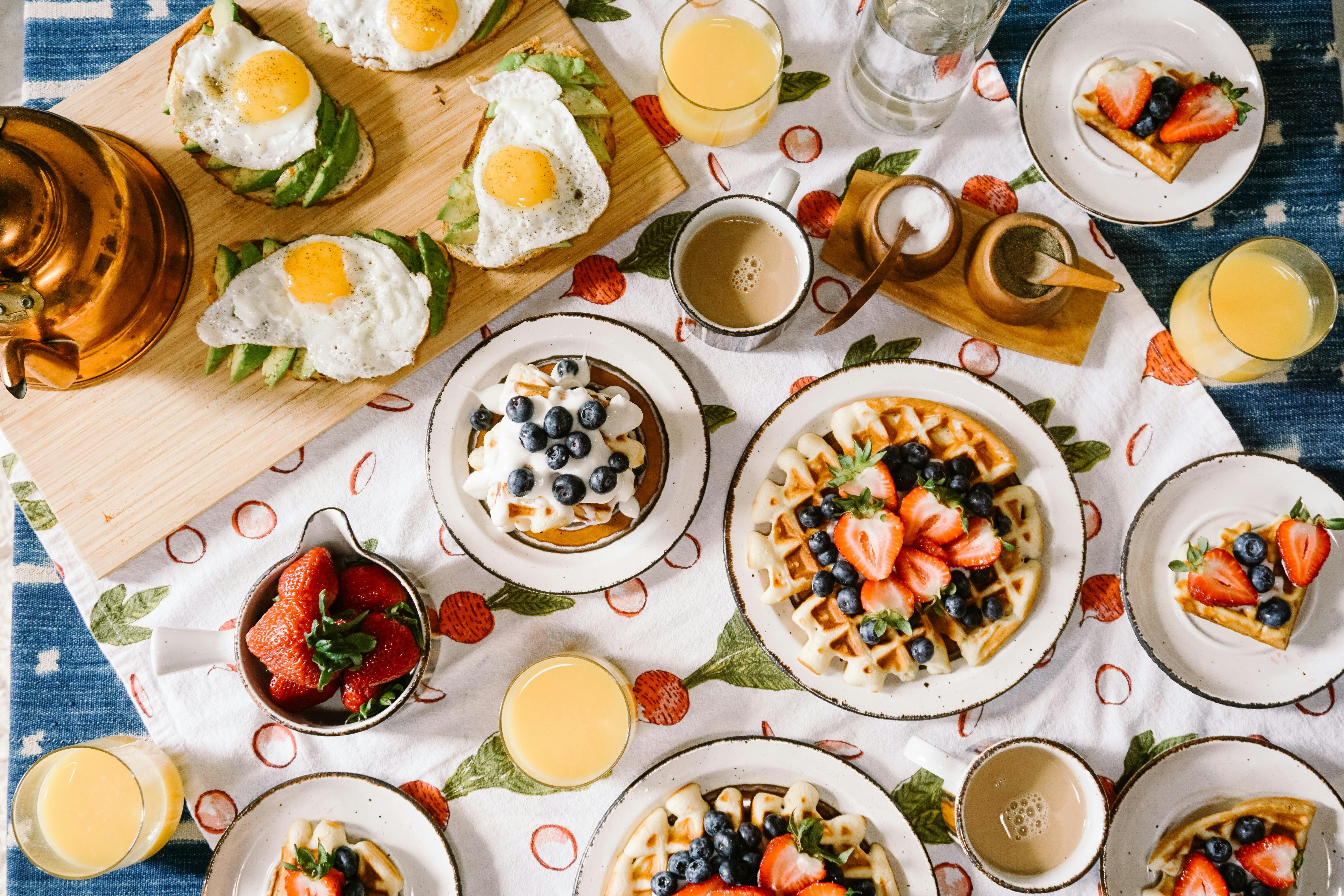
If we lived someplace else, such as Japan, we might eat something like this (see photo below).
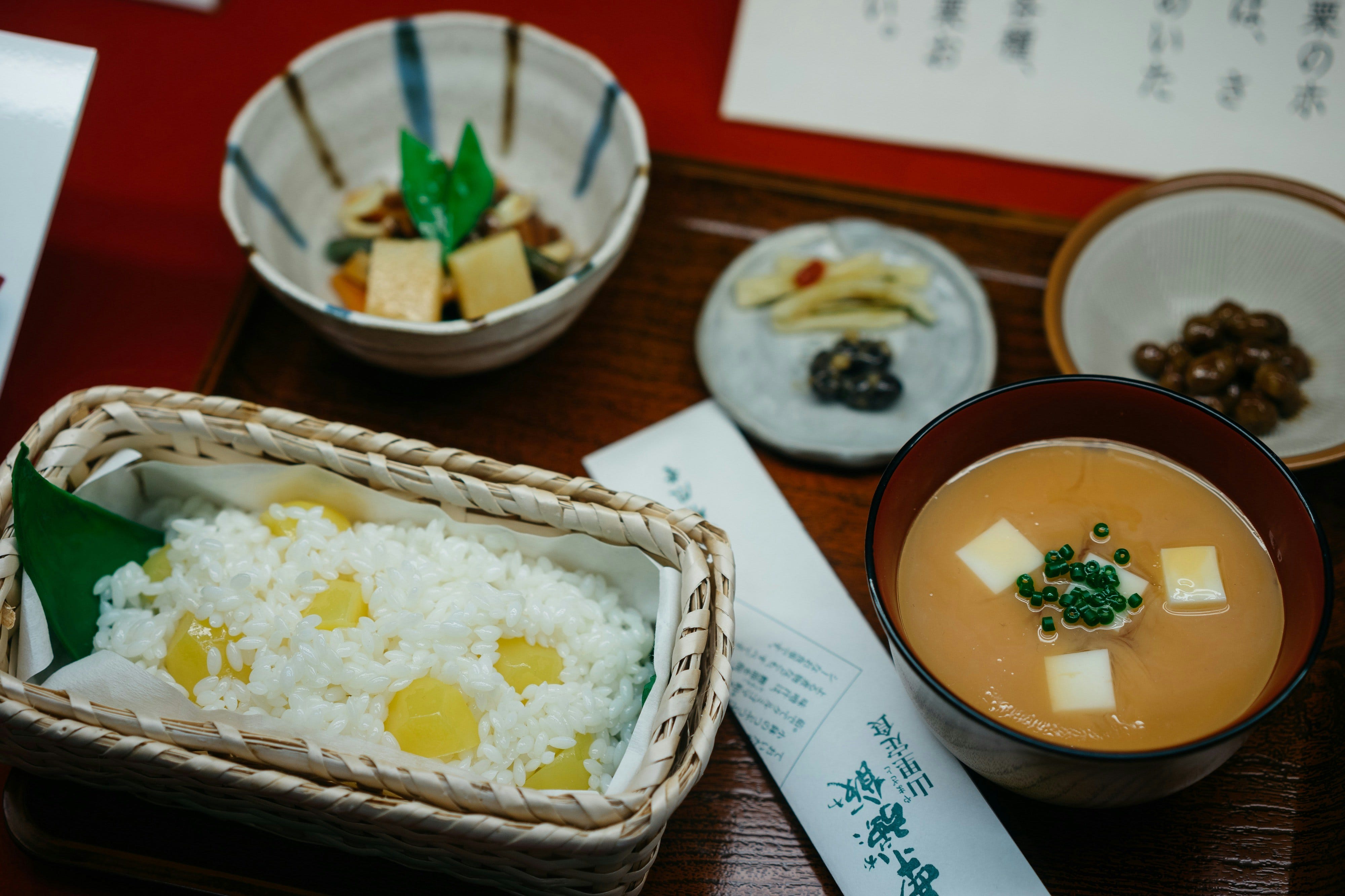
No one option is not inherently superior to the other. If you live in the United States, you might not even be aware that rice and miso soup is an option for breakfast. You might continue your breakfast habit of eating cereal, or toast, or eggs without any awareness that you could be eating rice instead. However, it may be that rice and miso soup in the morning are most beneficial for your digestive system. It may be that you would feel so much better throughout the day if you were to eat rice and miso soup instead of cereal and milk. I don’t know - but also neither do you if you keep following the habit.
Tying this back to creativity, what you eat in the morning helps to create your body state for the day. If you routinely, inadvertently, create a body state that is unwell, this will impact your day (and perhaps the experience of people around you).
We also create our body state with our thoughts. Fearful thoughts create anxious, fearful states. Worrying thoughts may create a similarly anxious state. I’m not good enough thoughts create sensations and subtle actions in our body state, such as scrunching our shoulders and hunching our backs.
Beyond our body state, our actions and thoughts create experiences for other people and other life forms on the planet. Hugging someone may create a feeling of being loved. Hitting someone may create a feeling of being unloved or unworthy. Stepping on insects creates a situation where they are no longer alive. Our thoughts have a similar, no less potent effect. If I think about how lovely someone is, my disposition toward them when I see them will reflect this, creating in them a feeling of being appreciated. If I think about how awful someone is, when I see them in person I might behave standoffishly – however subtly – creating in them a sense of apprehension or mistrust.
We create all the time. If we’re not aware of what we are creating and why, the effects can be far from what we may have intended.
The why of what we create is important. How do I know that what I want to create isn’t just another behavioral pattern or habitual way of thinking? If I say I want to create an annual salary of $500 million, how do I know whether this is true for me? How do I know if I am behaving authentically? There are countless origins for this desire, many of them arising from deep-rooted habitual ways of thinking. The latter may come from any number of behavioral patterns including thinking I am not worthy, feeling obliged to or responsible for my family, or needing power or control. Creating based on habits like these continues the pattern of creating without awareness, often in opposition to what our hearts truly desire.
It is easy to deceive ourselves into believing we are fully aware, fully free of behavioral patterns because they are so deftly woven into nearly every action and thought. Dismantling these patterns and figuring out what is true takes a lot of experimentation (see the posts on authenticity and curiosity). When I started the process of neutralizing these patterns, throughout the day I would ask myself questions like, “What I am creating?” and “Is this what I want to be creating?” I still check myself – are there turns of phrase, gestures, thoughts, or actions of which I am unaware or are automatic? If so, can I bring my awareness to them and choose to behave differently? Being free, being in a place of choice, is not easy. It is simple, but it is not easy.
*****
I find this perspective on creativity to be helpful in better understanding myself and others. Perhaps you will find it useful as well. Perhaps not. A perspective is just a way of looking at something – it is neither true nor false, good nor bad. If it leads to deeper understanding, then it’s beneficial. If not, we might want to look for another perspective.
Knowing myself as a creative being changed my relationship with the visual arts. I no longer fight to make art as I did when I was younger or judge what flows forth from the pencil or paintbrush as I did when I was older. Those habits I had created have fallen away. For the last few years visual arts have been a gift, helping me express what I struggle to communicate in words.
A word about my childhood art teacher: She almost certainly had no idea what she was creating – in me or in the class – when she held up my artwork that day. She was almost certainly responding based on her training as an artist – rules my creations refused to adhere to, unfortunately. She may have even thought her words would motivate me, especially if she herself had a behavioral pattern of being motivated by criticism.
Creating without awareness has consequences, especially for children.
*****
I want to acknowledge that throughout this piece I am using the word creativity in an unusual way. When asked what creativity means, our students typically define it as art, music, dance, song, improv, and something new or innovative. These definitions aren’t wrong, they’re simply narrow relative to the possibilities. Nevertheless, one can see that these examples are indeed creative as they seek to grow the creator and/or an idea, sound, movement, etc.
One aspect of creativity that we hold in high regard is that of something novel or unique. We tend not to think of a drawing that has been traced from another drawing as creative. But is it? Strictly speaking, yes, of course. Tracing a drawing, painting by numbers, sewing a pattern are all creative, but they are analogous to the kind of creativity that happens without awareness that we spoke about earlier. These are the equivalent of creating on autopilot, where we’re following a pre-defined pattern. To not follow a pattern – to not create a copy – requires us to break out of our routines and habitual thinking. This is why truly novel works of art, music, literature, mathematics are so rare and so revered. To create not on autopilot, but from a place of authenticity, is so special and so unique that we recognize it right away. It has a different feeling, a different texture.
This is not to say that there isn’t value in following the pattern or in taking an existing pattern and adding your own twist to it. There can be tremendous value in learning from copying. It is simply to say that creating from a place of true freedom and authenticity is rare. Many artists work alone or in isolation so as not to be influenced by social patterns in an attempt to find something pure and true.
There is an opportunity here to discuss the benefit of the creative process to our overall wellbeing. I’d like to leave this for another time as it wants to be a topic unto itself. Much has been written about the power and value of traditionally creative endeavors, including, paradoxically perhaps, their ability to break us out of habitual behavioral patterns. Everything from doodling to ecstatic dance has the potential to quiet our autopilot and give us access to the curious, spontaneous parts of ourselves that are often hidden or dormant.
I’d like suggest we try a variation on a traditionally creative act. Grab a sheet of paper and a pencil. Find a piece of music with which you are unfamiliar. Put the paper in front of you, hold the pencil, play the music, and then close your eyes. Let the hand that is holding the pencil dance to the music on the paper. Allow yourself to get lost in the music. Keep your eyes closed and your pencil dancing until the end. Open your eyes. What did you create?